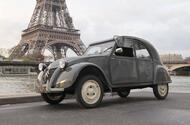
Affordable and sustainable new 2CV aims to ape the success of the original
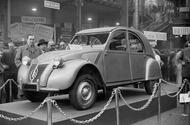
At the Paris motor show 78 years ago, Citroen unwrapped the 2CV, which was to perform precisely the same role in combustion motoring.
The Deux Chevaux Vapeur (‘two steam horsepower’) was actually nine years late. Work on the Toute Petite Voiture (‘very small car’) had begun way back in 1936 as a way to motorise rural France, but its 1939 debut was cancelled as Germany invaded. Prototypes were successfully hidden from the Nazis and revived after the war.
“Simplified to the point of crudity, it seems almost needlessly ugly, but it is full of original ideas planned to cut weight and cost and increase production,” we reported. The steel box-frame chassis bore on each side two suspension arms linked by tension rods to a central cylinder containing a spring.
It had a very thin steel body welded to it (with a canvas roof), home at the front to an air-cooled 375cc flat twin with a three-speed gearbox. The four ‘seats’ inside were cushions held to frames by rubber bands. Top speed was just 37mph, but economy was a superb 50-60mpg.
It cost a mere £213 (£5970 today) – £71 less than even Renault’s 4CV. Quelle surprise that the French went mad for it, making it the first car to sell a million and a cultural icon. It lasted right up until 1990, with some nine million produced.
The 2CV may have drawn the largest crowds, but there were other cheap cars for the impoverished French public to study, many of them designed post-war. Amid the severe austerity of the 2CV and its rivals from various other French firms, Ford France’s new V8 Vedette was “comparatively a breath of sanity, an example of how modern quantity production can reach to the best standards”.
In addition to its fast little 600cc saloon, Panhard presented “a startling streamlined four-seater body of aircraft inspiration on the same chassis”. Peugeot’s 203, meanwhile, was “deservedly one of the big attractions of the salon”, not least as it moved past chassis construction in favour of a monocoque. This was something also adopted by Rovin for its latest two-door economy car.
Mathis, having been refused permission to produce its miniature, even after converting it into a four-wheeler, presented a fascinating new prototype: Wimille progressed in its efforts to bring a sporty option to the class; and new firm Brandt brought a bizarre little thing with its doors front and rear.
At the other end of the spectrum, there was lots of stunningly elegant coachwork to be admired, sitting on Alfa Romeo, Bentley, Delahaye, Ferrari, Lancia and Talbot chassis. Saoutchik’s gold-plated coupé interior might have strayed into insulting territory, mind you…