
Stellantis deal to build Dongfeng EVs in Europe is latest in series of partnerships between Western and Chinese firms
China built its automotive expertise on enforced partnerships with foreign brands. The reward for global car makers was market access and billions in profits. But it came at a long-term price: those once humble manufacturing partners have become some of their toughest competitors globally.
Now global car makers are seeking help from the same Chinese partners as they scrabble to reduce costs and lift technology to the new Chinese standard. There’s one key difference, though: today’s partnerships have a lighter touch than the old industrial tie-ups mandated all those years ago in China.
“If you have a partnership with China and a good connection to Chinese suppliers, I think that is really one of the key things which will make you stronger,” Volvo CEO Håkan Samuelsson told the recent Financial Times Future of the Car conference.
Car makers operating at the volume end of the European market are suffering a doom spiral. A higher cost base in Europe is being pushed even higher as they lose manufacturing scale for one key reason: the Chinese are eating their market share.
“We’re competing with OEMs from China, but they have a very clear advantage around massive scale, as they export product into Europe,” Ford of Europe boss Jim Baumbick told the Financial Times conference. “We have to find our own way in Europe to generate competitive scale. We believe doing that through partnerships is a way to compete.”
Ford is reportedly talking to Geely about building cars at its underutilised Kuga plant in Valencia, Spain, as it looks to lower its industrial costs.
Ford hasn’t confirmed this report but has ramped up speculation that it will leverage Geely electrified platforms with the announcement that it will launch two new ‘multi-energy’ crossovers in Europe by 2029.
“We talk to tons of different companies all the time,” Baumbick told Autocar in response to our question.
A possible future Geely link-up would increase the number of partnerships Ford has on car development in Europe to three, after leveraging the Volkswagen Group’s MEB platform for the Explorer and Capri and now Renault for two small electric cars on the Renault 5 platform, due in 2028.
This kind of cherry-picking approach to partnerships is very different from the massive tie-ups of old, such as the Renault-Nissan Alliance or DaimlerChrysler. “We look for opportunities where we can both win and share,” Baumbick said.
Chats with potential partners can give a useful insight into where your company sits in terms of tech and cost, said Baumbick: “We can test [our] own internal hypothesis around the competitiveness of choices we’re making internally versus maybe leveraging partner technologies or assets for scale.”
There was some surprise in the industry when Ford went with Renault to develop and build its small EVs, rather than develop its existing relationship with Volkswagen. Baumbick’s boss, CEO Jim Farley, said we shouldn’t have been: among other benefits, Renault’s solution was cheaper.
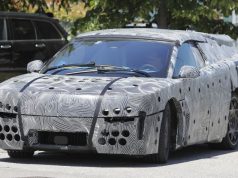
One of the furthest down the road in terms of incorporating knowhow from a Chinese partner is Stellantis, which has quickly leveraged its investment in EV specialist Leapmotor not just to fill its underutilised European factories but also use its tech for new models, starting with a new Vauxhall/Opel SUV, due in 2028.
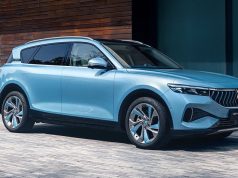
Stellantis has also signed a similar deal with its long-time joint-venture partner Dongfeng, setting up a Stellantis-controlled European arm to import the Chinese company’s upmarket Voyah EVs and tap into its engineering expertise.
Stellantis has moved fast to seek Chinese help in filling its European plants, estimated by the bank Jefferies to be suffering from spare capacity totalling around a million units a year.
Leapmotor will build its B10 and C10 EVs at the Stellantis facility in Zaragoza, Spain, starting this year, while the Dongfeng deal creates “potential” for production of Dongfeng EVs in Rennes, France.
A rash of similar reports linking Chinese production in existing European plants – including Chery and Dongfeng at Nissan’s Sunderland plant – has yet to translate to solid contracts, bar Leapmotor’s Zaragoza deal.
“With the exception of Chery’s early deal with Nissan in Spain, Chinese OEMs seem reluctant to rely on older, less efficient and unionised facilities,” Philippe Houchois, automotive analyst at Jefferies, wrote in a note to investors.
For Leapmotor, however, the broader link-up with Stellantis is a money-saver as it fights to grow share in Europe. “This, in my opinion, is another kind of profitability,” CFO Tengfei Li said on a recent earnings call. “Without this kind of partnership, we may have to invest 10 times higher than we have and may not reach the same results.”
For some established manufacturers, Europe has become so difficult that they can no longer develop models specifically for the region, and China is the preferred source for the electrified platforms and technology needed to keep pace with the tech and cost upheavals of the past five years or so.
Nissan is one example: CEO Ivan Espinosa has said the Japanese company will drop its long-term policy of creating products in Europe for Europe. Instead it will lean on models developed for its three core markets of China, the US and Japan.
“The competition is getting more and more severe with Chinese players,” Espinosa told the Financial Times conference. “Traditionally we were investing a lot on specific products for Europe. With the scale that we have, it has proven not sustainable.”
Asked by Autocar whether its Chinese partnerships might provide the next platform for its European models, Espinosa said Nissan “could consider doing something with what we’re creating in China”.
Another possibility is leaning further on its Alliance partner Renault, which is developing a new EV platform with range-extender options due to land in 2028 and already builds the Nissan Micra on the Renault 5 platform.
“It’s a very good win-win case, because Nissan doesn’t have to invest on its own on creating a product. With a fraction of the investment, we can get access to a competitive product,”
Honda is another Japanese company turning to Chinese partners to develop models, rather than just manufacturing them.
Global car makers operating in China are already increasingly using electrified platforms and associated technology from their Chinese partners, among them Audi, Mazda, Nissan, Toyota, Volkswagen and Volvo.
“Special products for China would be almost impossible for us to develop by ourselves,” Volvo’s Samuelsson said.
Geely, Volvo’s Chinese parent company, supplies the platform for the new XC70 long-range plug-in hybrid SUV, which is capable of travelling on 125 miles on electric power alone.
Partnerships are often difficult, former Nissan executive Andy Palmer told Autocar: “It’s hard to get to big corporate cultures to work together when you don’t have financial interests [in each other], where it’s purely a commercial contract. You try and name a collaboration that has really worked very well and it’s really hard to think of one.”
The key is to be humble going in, believes Samuelsson: “You first need to identify what you can learn from others, and then you need to be open and curious. I think the Chinese culture has always been a learning culture, and that is something we should really pick up.”
There are undoubtedly culture clashes, however. The speed at which the Chinese make decisions is both refreshing and frustrating for Westerners. New information can result in 180deg tacks on projects that aren’t properly communicated. The Chinese are also willing to bend rules, for example ignoring local employment regulation to carry on working the insane hours they do at home.
But the penalty for ignoring the Chinese way of working is even worse: death by unsustainable discounts.