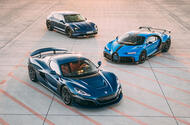
Porsche’s investment in Rimac started in 2018 but it has now completely severed ties in the loss-making firm
Porsche’s 2018 investment in Rimac was a wonderfully positive moment for the European automotive industry.
As a shift to electric power looked inevitable, the German firm was impressed enough by the Croatian EV start-up to take a 10% stake, rising to more than 20% in subsequent investments.
When the two joined forces to take over Bugatti in 2021, it heightened the optimism that as the world changed and electrification advanced, the epicentre of automotive innovation could remain in Europe.
Porsche’s split from Rimac, announced last week, is one more signal that that’s not happening.
After initially grabbing the lead in luxury EVs, Porsche is continuing to dial back its electric ambitions as the US retreats to ICE cars while Chinese buyers turn to faster-moving local brands.
Under new CEO Michael Leiters, cost-cutting is top of Porsche’s agenda as profits slump-and he couldn’t ignore that its investment in Rimac was losing it money.
In 2024, it booked a €140 million loss in Rimac Group and a €152m loss in Bugatti Rimac.
Matters improved to €70m loss in Rimac Group and a healthy €77m profit in Bugatti last year. But Porsche is now plotting flagship models of its own, and the undisclosed amount paid for its Rimac and Bugatti stake by New York-based investment firm HOF Capital will help that.
Rimac impressed Porsche by fulfilling an impossible challenge to improve its first EV, the Taycan. Rather than launch as car maker in its own right, it had parlayed its EV supercar knowledge to become an EV drivetrain supplier focusing on high-performance batteries, battery management tech and motors.
Realising they needed all the help they could get, Porsche, Aston Martin and BMW signed up.
But EV parts are under constant price pressure from cheaper alternatives, even at the top end.
Global prices in the automotive industry are increasingly based on just one standard, and that’s China’s,” said Bosch CEO Stefan Hartung in April.
Having previously described battery cells as the new combustion chamber, Porsche this year wrote off investment in its own performance battery company, Cellforce, and now it’s exiting Rimac. G
German automotive excellence has always been driven by investment at the top and trickling down. Electrification might have broken that link, leaving the path clear for the Chinese.