
This article may contain affiliate links.
Got something heavy to haul?
The trailer industry is huge, and it’s only getting bigger.
The global semi-trailer market was worth USD 22.8 billion in 2024, and that demand just keeps growing year after year.
There are many different types of trailers, and each trailer type is built for specific applications. Picking the wrong trailer can waste your time, money and cause massive headaches for your company.
In this article, we’re covering the most common trailer types used by all industries and when to use each trailer type.
Let’s dive in!
In This Guide:
Trailer Types 101
Flatbed Trailers 101
Dry Van Trailers 101
Refrigerated Trailers 101
Lowboy Trailers 101
Trailers by Industry
Trailer Types 101
Trailers come in all shapes and sizes.
Every trailer type was created to perform specific jobs. Different cargo requirements call for different trailer types. Whether hauling construction materials, electronics or temperature-sensitive items–there’s a trailer out there designed just for the job.
The secret to efficient freight transport? Match the trailer type to your exact needs.
The correct trailer type means easier loading, safer transport, more protection for your cargo, and overall better operations.
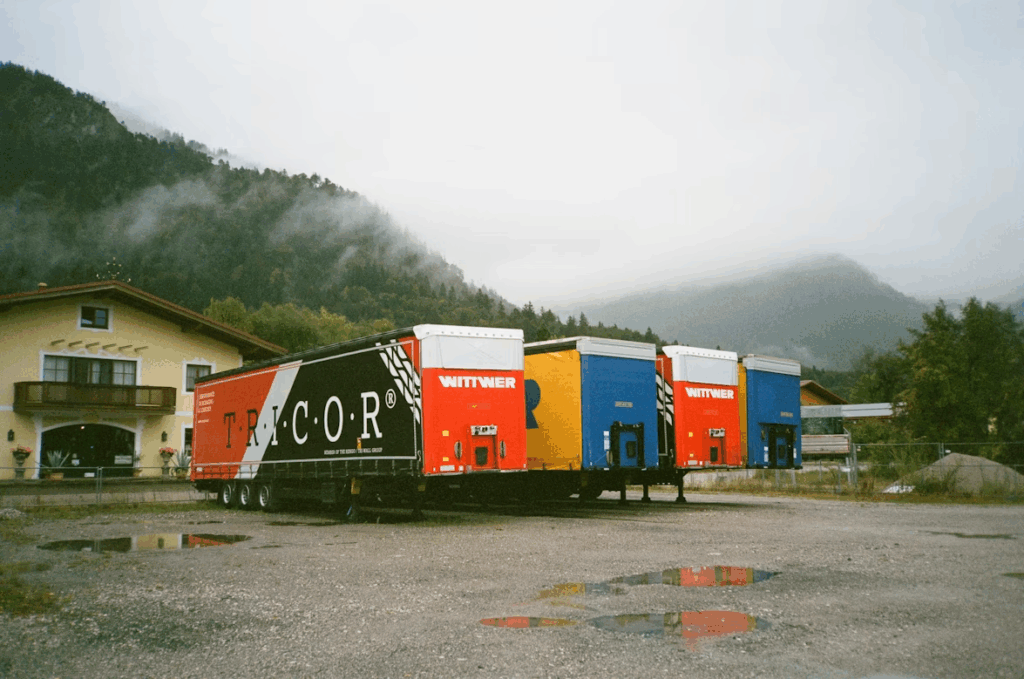
https://unsplash.com/photos/a-row-of-colorful-semi-trucks-parked-in-a-parking-lot-wfmkzPJD_1o
Flatbed Trailers 101
Flatbed trailers are the beasts of burden for heavy cargo transport.
These trailers feature a completely flat open deck with no sides or roof. This makes them perfect for oversized loads, construction materials, and equipment that can’t fit inside enclosed trailers.
You’ll see flatbed trailers hauling everything like:
Steel beams and other construction materials
Heavy machinery and equipment
Large industrial components
Building supplies and lumber
Flatbed trailers are incredibly versatile. You can load them from any side, and they can accommodate oddly-shaped cargo that simply won’t fit into other trailer types.
For example, when it comes to urban areas, the urban trailer is a great option. These trailers have smaller decks for tighter city streets. They also have great maneuverability for the tight corners of a metropolitan area.
Fuel Cell Flatbed Trailers (another example of one of Dennison’s trailers) with its low carbon emissions will enable you to ship cargo with zero or low levels of environmental impact.
Flatbed trailers held a significant market share in 2024, largely due to growth in the construction industry across both developed and emerging economies.
Dry Van Trailers 101
Protect your cargo from the elements?
Dry van trailers are enclosed trailers that protect your goods from weather, dust, and theft. Dry vans are the most common trailer type you’ll see driving on the highways. Dry vans captured 55.21% of the semi-trailer market share in 2024, thanks to their extreme versatility.
Dry van trailers are perfect for moving things like:
Retail goods and consumer products
Electronics and packaged items
Non-perishable food products
Manufacturing components
The enclosed design means your cargo is safe and secure during transport. This is why you see so many retailers, manufacturers, and e-commerce companies utilizing dry vans for shipping.
Dry-Van-Trailers
Refrigerated Trailers 101
Not all cargo can tolerate ambient temperatures during shipping. That’s where refrigerated trailers (reefers) come into play. These special trailers maintain a specific temperature range during transport. Refrigerated trailers are critical for hauling:
Fresh produce and vegetables
Frozen foods and ice cream
Pharmaceuticals and vaccines
Flowers and perishable goods
The cold chain industry relies on refrigerated trailers to keep products fresh from the warehouse all the way to the customer. Without them, billions in temperature-sensitive cargo would spoil during shipping.
Lowboy Trailers 101
Need to transport extremely heavy or oversized equipment?
Lowboy trailers are made specifically for those big loads. These trailers have a unique low deck height that makes it easier to load tall equipment. Lowboy trailers have 26.2% market share in 2024, thanks to their unmatched ability to transport heavy and oversized loads that other trailers simply can’t manage.
Lowboys are used by industries such as:
Construction companies hauling excavators and bulldozers
Mining operations moving heavy machinery
Energy companies transporting wind turbine components
Manufacturing facilities shipping large industrial equipment
The lower deck height also lowers the center of gravity during transport. This makes for a more stable load with reduced risk of accidents.
Trailers by Industry
Each industry has their own unique transportation needs.
Transportation and logistics firms retained 41.23% revenue leadership as these companies depend on various trailer types to serve customers across multiple industries.
Let me show you which trailers work best for each industry:
Construction Industry
Construction sites utilize flatbed and lowboy trailers to move heavy equipment, building materials, and oversized loads. These trailers can handle everything from concrete barriers to large cranes.
Retail and E-Commerce
Online shopping has boomed over the past few years. Retailers need more dry van trailers than ever before to transport their products from warehouses to distribution centers and, ultimately, customers.
Food and Beverage Sector
Temperature control is the name of the game for this industry. Refrigerated trailers ensure that fresh produce, dairy products, and frozen foods all maintain their quality all the way through the supply chain.
Manufacturing and Industrial
Manufacturing plants use a mix of trailer types depending on what they’re shipping. Raw materials may travel in dry vans while finished machinery requires flatbed or lowboy trailers.
Matching Trailers to Your Needs
Picking the right trailer type is really not that hard once you know what you need.
Ask yourself these questions:
What are you hauling? The type of cargo you need to transport determines the trailer type that you need. Heavy equipment requires different trailers than packaged retail goods.
Is protection necessary? If your cargo is sensitive to weather, dust, or temperature changes, you’ll need an enclosed or refrigerated trailer rather than an open flatbed.
What’s the size and weight? If your load is oversized or extremely heavy, you’ll need specialized trailers like lowboys to handle the additional weight and size.
The trailer industry will only continue to grow because businesses of all sizes and across all industries require reliable transport solutions.
The Takeaway
The right trailer type matters for your shipping requirements.
Flatbed trailers give you versatility for oversized loads. Dry vans protect goods from the elements. Refrigerated trailers provide temperature control. Lowboys haul the heaviest equipment.
Each industry has its own cargo requirements, and there’s a trailer type that was designed specifically to meet those needs. Understanding the various trailer options helps you make better transportation decisions for your business.
Whether shipping construction materials, retail goods or temperature-sensitive cargo, the right trailer means your cargo arrives safely and on time.
The post Trailer Types and Their Uses in Various Industries first appeared on Clean Fleet Report.