
Honda’s coupé is back after 25 years, this time playing a hybrid tune. Can it stand out?
Great rivals aren’t in the habit of doing each other favours.
Would Borg and McEnroe have lent each other a racket? David Coulthard says Michael Schumacher once let him borrow a spare racing helmet.
But what if Damon Hill had asked? You have to wonder, therefore, if Toyota actually considered Honda a great rival when in 1978 – in an act so widely reported as an ‘amicable transfer’ as surely to have been how the parties directly involved described it – the rights to a certain model name trademark that Toyota happened to own were signed over to its domestic-market competitor.
That’s how the Honda Prelude got its name. Toyota’s way of ‘amicably’ acknowledging Honda’s penchant for model titles with musical themes, supposedly. I don’t buy it. Of all of those (and between the Ballade, Concerto, Quintet, Jazz and Beat there would be plenty), only the Accord existed in 1978. Not enough established precedent, surely. There must have been some other quid pro quo.
At any rate, it was the spark of life for a line of mid-sized, front-drive coupés that eventually brought some interesting new technologies to affordable levels of the new car market throughout the 1980s and 1990s – only to bow out in 2001. The Prelude had blooded mechanical four-wheel steering and an early form of front-axle torque vectoring before it left the stage, as well as benefiting from Honda’s celebrated VTEC combustion technology.
So long was the hiatus that the car subsequently took, however, that Honda had to re-register the Prelude trademark in the North American market in 2023. While some attentive hacks noticed, few seemed to know whether to be excited or not. The sixth-generation Prelude duly arrived anyway, every bit as bold as its various predecessors – albeit in rather different ways. Here in Europe, it’s re-entering a coupé segment from which its competitors have almost universally fled.
And it’s doing so with a car that doesn’t have a rasping multi-cylinder engine with which to tempt buyers, nor even a high-revving four-cylinder VTEC screamer. It’s doing so with a hybrid. Can that work? Time to take a view. Twenty-five years ago, back when the world was still getting used to the original Honda Insight, you wouldn’t have given this strategy a prayer. But in 2026? Anything’s possible.
Bring on the rivals
There has always been an alternative streak about the Prelude, so it didn’t seem suitable to take a conventional approach when picking rivals for it. As it happened, BMW was unable to supply a BMW 2 Series Coupe, but the Bavarian is a rear-driven option with a much more traditional longways-mounted combustion engine anyway, whereas the Prelude is, and has always been, a front-drive progressive.
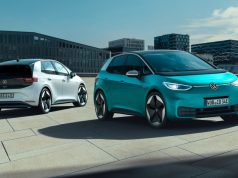
So we summoned two front-driven rivals to provide some useful context – both also hybrids, but one of them certainly not a car that any interested driver might have considered until its latest, rather transformative, reimagination. Honda Prelude, meet the Volkswagen Golf GTE and the Toyota Prius Plug-in. And who could say this isn’t the perfect group test cast when the Prius and Prelude – from some angles, at least – look so eerily similar?
The sheer spaceship-like rakishness of the Toyota surprised everybody when we first laid eyes on it three and a half years ago. It remains shocking enough even today, mostly because you see so few of them. That the Honda effortlessly outshines the more humdrum Volkswagen Golf GTE is as predictable as it is wholly irrefutable when they’re parked next to each other. But that it also manages to put such a daring-looking car as the Prius in the shade – and it does – says much more.
The Prelude’s proportions are fundamentally better, even if it’s not quite as original as the Toyota, borrowing noticeably from one or two other manufacturers’ copybooks. It’s a fine-looking car all the same, elegant but quietly purposeful, classic yet progressive, with just enough bulk and definition in the right areas.
That’s its first test aced. What about the spec-sheet tussle? It’s important to note for starters that both of its competitors here are plug-in hybrids, whereas the Prelude isn’t. It’s not a huge technical Rubicon. The Honda’s powertrain is a primarily series-hybrid-style, range-extender system, with an electric motor that does most of the grunt work, backed up by a 2.0-litre Atkinson-cycle petrol engine that mostly runs as a generator but can connect to the wheels via planetary gearing when switching to higher-constant-load, parallel-hybrid running.
Pretty much exactly the same is true of the Toyota, except that the Prius’s electric motor is marginally less powerful than the Prelude’s and it has a much larger lithium-ion drive battery from which it can draw, for an electric range of a little over 50 miles. The Volkswagen Golf GTE, meanwhile, is the only car here with a conventional multi-speed automatic gearbox; it has the largest drive battery, by some margin; and it carries the most bulk.
Despite it being the most powerful car here on a total system output basis, it also uses the least powerful electric motor of the three contenders. It doesn’t ever run as an ‘electric-first’ series hybrid. In the Golf, when the engine’s running, it’s driving. Will that make it more familiar? Ultimately more convincing as a driver’s car, perhaps? We’ll see.
As far as interiors go, what the Golf surrenders to the Prius and Prelude in low-slung sleekness it makes up for with usability and space. Honda’s hatchback-style bootlid gives it almost as much cargo space as the Toyota (264 litres versus 284 litres), although the Prius’s back seats are not only much easier to access but also notably more spacious once you’re in them. Teenagers and smaller adults could travel comfortably enough in the back of the Toyota, whereas in the Honda you would hesitate to offer a back seat to anyone over the age of 10.
The Golf GTE is, basically, ‘just like a Golf’: versatile, functional, neat, unassuming; an entirely everyday item. Sitting in it, you feel considerably less low-slung and ‘ready for launch’ than in either of the other cars and the layout of the controls and displays ahead of you looks and is a lot more conventional (and that’s not in every respect a bad thing).
What about performance?
There was a fair bit of uproar when the Prelude was announced on the ‘Made Greater, Again’ side of the Atlantic, I understand. Over there, it offers a system output of 200bhp, which is less than some old versions of the car left with 25 years ago. Hence the barracking. Well, because of European emissions regulations, we get the car with its petrol engine turned down further still, with only 181bhp. And yet the UK and wider European uproar has been notable by its absence, hasn’t it? What a wonderfully mature lot we are.
Honda doesn’t actually claim a total system, engine-clutched-on, parallel-series torque figure, but I would estimate that it must be well beyond 250lb ft, because the Prelude certainly feels brisk. Not quite top-level hot hatchback fast, but quick enough to make a climbing, twisting, uneven mountain road in the Rhondda nicely interesting to set about. It becomes clear, quite quickly, that this car’s hybrid powertrain needn’t be any obstacle to your enjoyment of an otherwise impressive driver’s car. It needn’t be the big, hairy fly in your otherwise tasty, peppery wholefood salad. It goes well.
It’s intuitive, and moderately engaging with it. It even sounds quite good, not least because the hybrid system does a clever impression of a paddle-shift automatic gearbox. This is possible because most of the time – and until you’re using the last inch or so of throttle pedal travel, as it turns out – the Prelude’s electric motor is potent enough to meet the performance demands you’re placing on the hybrid system by itself.
That leaves the combustion engine free to basically provide audible accompaniment. Honda has realised that as long as the engine is working to a certain crank speed, then it’s generating enough voltage to keep the battery and motor topped up, and it can literally just pretend to be a conventional paddle-shift automatic. It can rev up and then ‘shift’, time and again, as if it were connected to a real multi-speed automatic gearbox and then the front wheels, even though it’s not – well, not necessarily. It can even give you a manual mode.
As long as the software calibration is clever enough, you might never know the difference. So is it? Well, there’s evidently a minimum crank speed that the combustion engine would seem to need to hit in order for the car to produce full power, and maximum thrust, beyond about 30mph. Here, the electric motor clearly isn’t quite grunty enough all on its own.
What this means on the road is that the Prelude is more convincing if you leave it in ‘D’ (or else just stop short of using absolutely full power) than it is in paddle-shift manual mode. That’s because the car won’t quite hold a ‘high gear’ at full load. It needs to rev; needs to ‘downshift’. It’s a bit like a real auto with a slightly annoying habit of kicking down, and without a properly ‘locked in’ manual mode.
Is that better than the Prius powertrain’s idea of high performance? You would say so – and by some distance. In the Prius, you can’t even pretend to pick a gear. There are no paddles. It’s a surprisingly quick car, with lots of accessible torque, but if you want it to go fast, it’s that ‘elastic band’ delivery or nothing.
The Golf GTE’s powertrain gives the Honda some tougher competition, which is precisely why it’s in our line-up. You can actually select gears here for real. There’s also significantly more power on tap in the GTE, and stronger roll-on performance. The Golf’s powertrain ought, surely, to show the Prelude’s up as a transparent charlatan. Well, here’s the thing: it doesn’t.
The Prelude’s impression of a paddle-shift auto ‘box is actually good enough to make the GTE’s dual-clutch automatic seem slow-witted and clunky. Philosophically, you might well detest that idea, but in practice, I couldn’t deny it. The Honda’s make-believe upshifts are instant, the lack of interruption in the power delivery accompanying them a little strange but not lastingly problematic at all.
In the end, the Golf seems like a performance car fraud more often than the Prelude because of the way it insists on continuing to shut down its engine under light loads and when braking, to restart it again only seconds later, even when you’re using Sport mode and manual mode on the gearbox. The Golf is quicker, and its powertrain is ultimately more controllable, yet it’s no more intuitive or engaging in an aggregated sense. Somehow, it has plenty of ‘computer says no’ moments all of its own.
A touch of class
So the Prelude’s hybrid system is worthy of it – worthy of a mature, versatile and sophisticated sort of driver’s car definitely, and though it might be outpunched by its rivals here, it certainly isn’t outclassed. Which, if this were a 4x100m athletics relay race, would hand the baton to its chassis narrowly in the lead, and the field’s favourite on the anchor leg. What happens next is predictable, yet plain as day.
The Honda is not tetchily firm-riding or bristling with dynamic intent but it does handle and steer like a car with less bulk, a wider stance and a lower centre of gravity than either the Volkswagen or Toyota.
And that’s not all. The Prelude uses Honda Civic Type R axle hardware to conjure its particular blend of grip, stability, poise and feel, but it uses it differently. The effect is undoubtedly less touring car yobby in its feel, but little less dynamically impressive than the Civic. The weight, pace and feel in the steering are really sweetly blended, so it turns in and holds a line through a fast bend very intuitively and precisely. There’s an assured, measured sort of steady-state balance about the chassis.
It’s happy to be hurried and has grip to spare, and taut but fluent damping at speed that can filter inputs without any heave or any abiding adverse sense of excess mass.
But it’s happier at an eight-and-a-half-tenths pace, at which you can soak in more of its subjective and tactile qualities and, meantime, also be frustrated a little less by what limitations the car’s powertrain has. The Golf? It feels firmer-sprung at low speed but ultimately quite starkly taller and heavier, with more pronounced roll when changing direction, and bigger deflections over lumps and bumps. In isolation, these things probably wouldn’t register, but having a lighter, leaner, lower-slung coupé close at hand puts them squarely in the spotlight.
And the Prius? We had a bottom-tier model on 17in wheels, which you wouldn’t choose for a car that you wanted real handling appeal from. But, mechanical grip level apart, it actually did okay. It handled with more immediacy than the Golf and had a more supple country road ride with an easier, more lenient but effective brand of body control around the national speed limit. This is certainly a car that you can enjoy a B-road flit in and its low body profile achieves more for it these days, clearly, than simply cutting drag.
But neither the Volkswagen nor the Toyota has a driving experience that comes together quite as convincingly as does the Honda’s. The Prius has most of the looks and all of the pace, but not quite enough driver focus, in the end, to get on the required level. Given its perennially responsible positioning, we can perhaps forgive it that.
The Golf GTE has even more of the necessary pace, and enough sporting intent. But, despite having so much more power, its powertrain is missing a knockout punch, while its relatively humble hatchback chassis – in this context, which is undeniably tough on it – is ill-placed to make up the shortfall.
The Prelude, by contrast, feels like an encouragingly rounded, widely talented, surprisingly sophisticated package. Its powertrain isn’t perfect, but it does more than hold its end up. It isn’t special or spectacular, but it is well integrated, thoroughly modern and fiendishly clever. If mainstream driver’s cars are going to survive the next 10 years or so, you can’t help thinking, cars like this will probably show the way.
1st: Honda Prelude A much-needed champion for the affordable front-drive coupé’s cause, the Prelude has true driver appeal that its innovative hybrid powertrain feels worthy of.
2nd: Volkswagen Golf GTE A great electrified compromise for everyday use, with some added driver appeal to sweeten the deal, though not enough to lift it to a truly sporting level.
3rd: Toyota Prius Prius brings much more to the table dynamically than any of its predecessors and looks like it means business. Still lacks a really engaging character.
HONDA PRELUDE e:HEV
VOLKSWAGEN GOLF GTE
TOYOTA PRIUS PLUG-IN
Rating
Four out of five stars
Three and a half out of five stars
Three and a half out of five stars
Price
£40,995
£40,140
£37,895
Engine
4 cyls in line, 1993cc, petrol, plus 181bhp electric motor
4 cyls in line, 1498cc, turbocharged, petrol, plus 108bhp electric motor
4 cyls in line, 1987cc, petrol, plus 161bhp electric motor
Power
181bhp
268bhp
220bhp
Torque
na
na
na
Gearbox
e-CVT, FWD
6-spd dual-clutch automatic, FWD
e-CVT, FWD
Kerb weight
1480kg
1670kg
1545kg
0-62mph
8.2sec
6.6sec
6.8sec
Top speed
117mph
143mph
110mph
Battery
1.05kWh (total)
25.7/19.7kWh (total/usable)
13.6/10.8kWh (total/usable)
Economy
54.3mpg
212.4mpg
403.5mpg
Electric range
na
81 miles
53 miles
CO2, tax band
117g/km, 29%
8g/km, 6%
17g/km, 9%