Can Hyundai’s compact crossover keep up with rivals?
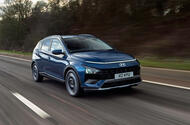
It’s easy to forget about the Hyundai Bayon. It’s not a model that the brand tends to shout about, perhaps because it’s one of the older, more traditional cars in their line-up, forgoing hybrid or electric power, jazzy screens and a dearth of buttons.That allows it to be reasonably priced, a key advantage in a segment that tries to offer SUV practicality and feel in supermini-sized and priced cars.Partly for that reason, it hasn’t set the sales charts alight. But perhaps that’s unfair, because while rivals like the Ford Puma, Nissan Juke and Vauxhall Mokka are hot sellers, the Bayon is better in some ways.Hyundai Bayon range at a glanceHyundai released the Bayon in 2021, and in 2024 it was treated to a light nip and tuck facelift. Since then, the range has been slimmed down to just two trim levels and a choice of manual or automatic gearboxes. Originally available in a plethora of trims and 99bhp or 118bhp petrol and mild-hybrid forms, it now makes do with a single 89bhp 1.0-litre pure-petrol engine paired to a six-speed manual or seven-speed dual-clutch automatic gearbox (for a £1200 premium). The loss of a mild-hybrid option does mean that the official fuel economy for the Bayon falls from 53.3mpg to 47.9mpg and CO2 rises from 121g/km to 133g/km for the manual version (the automatic is roughly 1mpg more efficient on paper). Choice of trims is restricted to Black Line at just under £24,000 and Tech Line at just over £25,000 – very competitively priced for the class. Previously, you could choose between SE Connect, Advance, Premium and Ultimate.