
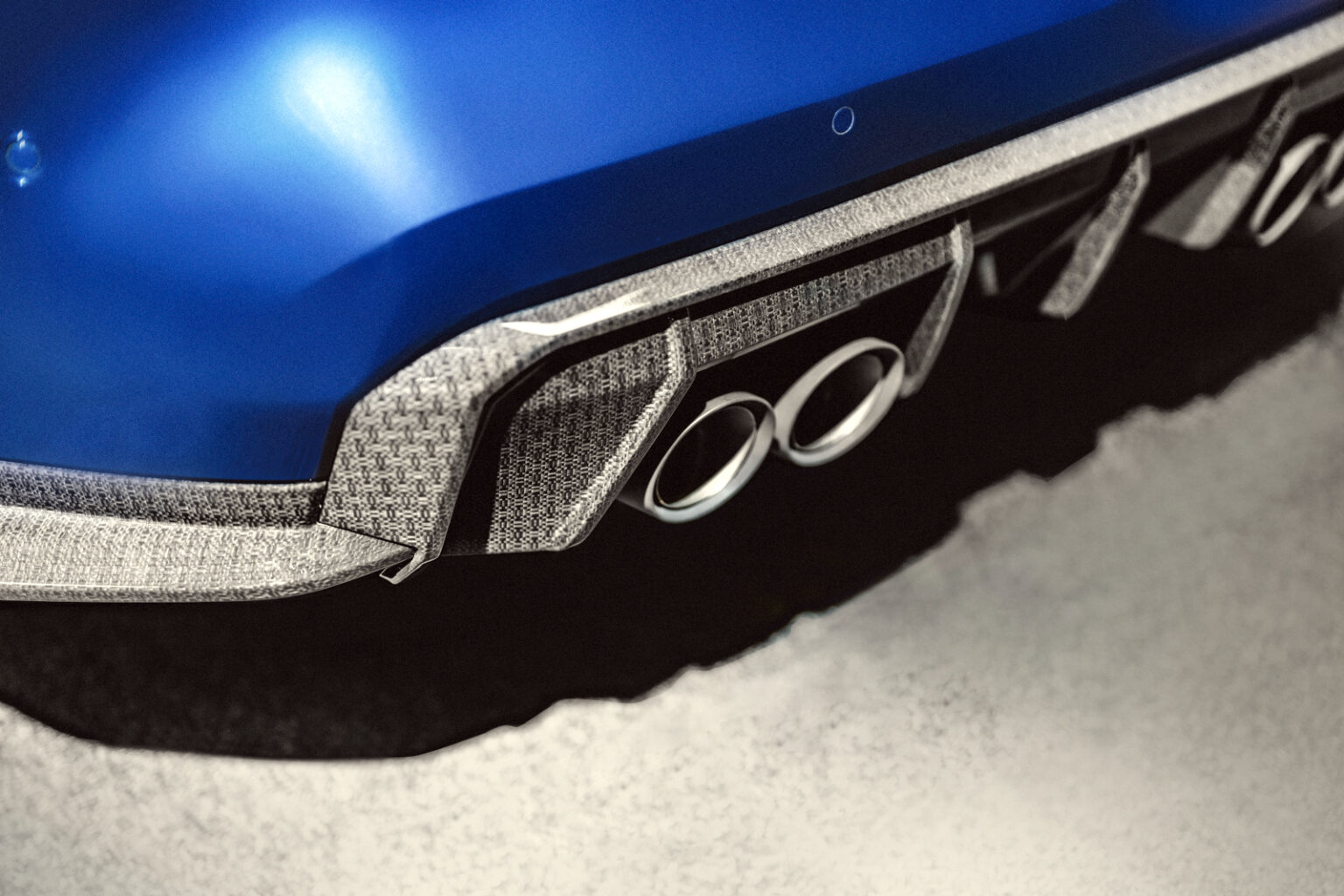
Bio-Composites Head from the Track to the Showroom
It was only in 2010 that the first commercially viable electric vehicle, the Nissan Leaf, was released into the market. On a single charge, it could travel 73 miles. Since then, the range of electric vehicles on a single charge has increased nearly eightfold. However, despite technological improvements and battery efficiency advances, weight remains a big challenge for these vehicles. Since lighter vehicles require less energy to travel the same distance, every pound reduction delivers tangible benefits to automotive manufacturers seeking a competitive advantage.
Recently, the Guinness World Record for the longest electric SUV journey on a single charge was set at 22 hours 57 minutes, driving just over 581 miles across UK public roads. This achieved an efficiency of 12.1 kilowatt-hours per 100 kilometres (Ed. note: This is roughly 173 MPGe, converting electric propulsion to the equivalent gas efficiency), The EV sector has gone through many technological advancements to reach this milestone, but to push vehicle efficacy even further, lightweighting is essential. One promising solution gaining traction throughout vehicle interior and exterior parts is natural fibre composites, materials derived from plant-based fibres like flax, that can match the structural performance of traditional materials while significantly reducing weight and reducing the environmental impact.
From Racetrack Innovation To Road-Ready Performance
These materials, which were first validated in high-performance racing environments, significantly reduce vehicle weight while maintaining structural integrity. This weight reduction is particularly crucial for electric vehicles, where every pound saved translates to improved efficiency and performance.
As consumer demands and regulatory landscapes shift, the automotive industry is increasingly turning to sustainable materials and innovative manufacturing techniques to maintain an advantage. Electric vehicles are leading the charge in demonstrating their practical benefits, delivering measurable improvements in efficiency and environmental impact.
Racing environments have long served as testing grounds for innovative materials. Their fast-paced R&D cycles enable rapid iteration and real-world testing under extreme conditions–high temperatures, constant vibration and significant mechanical stress.
Natural fiber bio-based composites, like many technologies first tested and developed for the racetrack, have demonstrated they can withstand these demanding environments and deliver performance benefits that translate effectively to everyday automotive applications. Flax fiber composites have proven their credentials in this high-performance arena, with durability and weight-saving benefits validated in motorsports now being integrated into production vehicles from Polestar, Cupra and BMW.
A New Blueprint for Sustainable Automotive Design
The transition of natural fiber composites from specialized racing applications to mainstream vehicle production shows how more sustainable materials can meet performance requirements while reducing environmental impact. These technologies are now being implemented in large-scale manufacturing for both interior and exterior automotive components.
Automakers have a clear takeaway: race-proven materials like flax-fiber composites have moved beyond the experimental stage. They are now practical solutions for achieving lighter, more efficient and sustainable vehicles. Companies that adopt them early will set the pace and shape the future of the fast-moving EV market.
Natural fiber materials have evolved from experimental status to become proven performance solutions in automotive manufacturing. In many applications, these alternatives can match and, in some instances, exceed traditional materials on key performance metrics, all while avoiding the geopolitical supply chain vulnerabilities and environmental costs associated with conventional options. The recent world record achievement demonstrates that sustainable materials are no longer a compromise. Instead, they are already enabling vehicles to reach new levels of efficiency and performance.
The post How Race-Proven Materials Are Transforming EVs first appeared on Clean Fleet Report.