Initial flame of enthusiasm was quickly doused by a series of issues and China effortlessly grabbed the baton
Volvo’s boss has spoken about his hopes that rivalry between the company’s upcoming EX60 and the new BMW iX3 and Mercedes GLC EQ will spark renewed interested in electric cars at the premium end.
The whole industry should be thinking the same. So far the European premium brands have failed to provide the leadership from which enthusiasm in new tech usually emerges from.
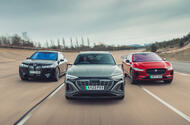
Early moves such as the Jaguar I-Pace, Audi E-tron and Mercedes EQC initially provided a flame of enthusiasm, but a series of issues quickly doused that.
Worst was perhaps the Porsche Taycan. Launched to critical acclaim and initial buyer fervour, the electric sports saloon’s reputation quickly took a dive as serious reliability issues (including failed batteries) hit.
That led to a crash in residuals and subsequent drop in sales (-31% in Europe last year). Nothing quashes demand quicker among premium buyers than tumbling resale values.
Porsche has fixed the problems, but such has been the dent that the company is rumoured to be axing the Taycan as part of its wider plan to retrench back into combustion engines.
The Porsche-led PPE Sport platform was kicked into the long grass, precluding subsequent EV models not just from Porsche but also from Audi, Bentley and Lamborghini.
As a result, many of the usual flag-flyers have slunk away from EV leadership.
In their place moves China, which has effortlessly grabbed the baton, even if most of its EV exports so far have majored on value rather than any great technical advancement.
The mantle for EV inspiration in Europe in the meantime has been worn best by volume players like Renault with the retro-chic 5 and Hyundai with the gnarly Ioniq 5 N.
But it’s the premium brands that need to own EV development. They have the money, the followers and the brand power required to convince the sceptics. They are present, of course, but EVs based on ICE platforms can’t hope to inspire.
With the iX3, GLC EQ, EX60 and Jaguar GT, along with subsequent EVs based on their platforms, Europe has the chance to reclaim the EV halo by generating real excitement.
That might be nerdy appreciation for ultra-fast charging, new manufacturing methods like gigacasting, software updatability or near-autonomous readiness – or it might just be passing admiration for eye-popping performance or anxiety-quelling range.
Whatever it is, these and subsequent EVs need to be bang on the money. The European industry can’t fluff it a second time.