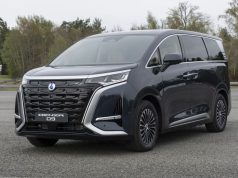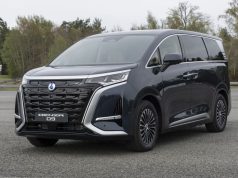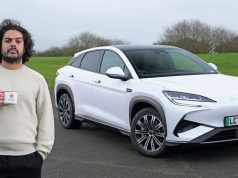
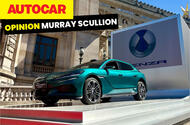
As Denza prepares to hunt Porsche customers, we ask: is glitz and glamour enough to join the old guard?
The BYD-owned Denza brand has thrust itself onto the European stage with a lavish launch event at the Palais Garnier in Paris.
This cinematic, blockbuster-scale soirée marked its official entry into the European market – and it was by far and away the most opulent launch event I’ve ever attended.
The Palais Garnier is, of course, the Parisian opera house. Completed in 1875, it’s a bona fide cultural institution and the legendary inspiration for Gaston Leroux’s 1910 novel The Phantom of the Opera.
The guest list was suitably stellar: motorsport royalty like Felipe Massa and Jean Todt rubbed shoulders with a glittering array of modern celebrities. Naturally, the requisite army of influencers did their bit, dutifully supplying the correct hashtags and parroting Denza’s tagline, ‘Technology Drives Elegance’. Global CEOs and politicians were reportedly in attendance too, keeping a decidedly low profile.
On arrival, I was met by a scrum of the young and glamorous queuing for half an hour just to snap a picture alongside the Z9 GT shooting brake, its modern lines contrasting sharply against the ornate Second Empire architecture. It was undeniably buzzy. It looked fantastic on Instagram.
But will any of this actually equate to sales? I understand the strategy: soft power is a potent weapon, one that nations and corporations alike have wielded for decades. BYD’s sponsorship of the Euro 2024 football tournament made perfect sense, capturing a cumulative audience north of five billion.
Yet I wonder if this Parisian spectacle possesses the same mainstream traction. Denza is not merely a new brand but also one deliberately swimming against the tide. It’s transparently pitching itself as a Porsche rival, demanding Porsche money.
The Z9 GT EV will command around £100,000 when it lands in the UK. Granted, it boasts more than 1100bhp, a level of performance that would require parting with £160,000 in Stuttgart. But a standard Porsche Taycan can still be had for roughly £90,000, and Porsche buyers will require serious convincing to abandon heritage for an upstart.
So where else are buyers coming from? Polestar customers might embrace the disruptor narrative, but they are reassured by the underlying Volvo pedigree. Jaguar enthusiasts, perhaps? If online comment sections are any metric, Jaguar is currently struggling to attract Jaguar buyers.
Does the grand illusion work? Do buyers in the £100,000-car bracket actually attend the opera? While the Palais Garnier projects an aura of ‘old money’ to the uninitiated, it isn’t exactly where true wealth spends its weekends. A cursory Google search reveals the reality: it’s a tourist attraction that occasionally stages an opera. You can rent a room there on Airbnb. You will find more about it on GetYourGuide than in Art Review.
Denza is undoubtedly a bold new brand attempting something different. However, the Z9 ultimately lacks the elusive ‘wow’ factor that’s required to sever buyers’ allegiances to established European marques. And I remain unconvinced that hosting a glitzy gala dinner at a heavily trafficked opera house will be enough to lure them into the showrooms.