
Far more than a Taycan rival – this Scandi spaceship has bags of character and desirability
In these homogenised times not many cars have the ability to stop you in your tracks, but leave it to Polestar – unabashedly design-led – to deliver one of the few.
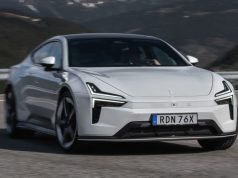
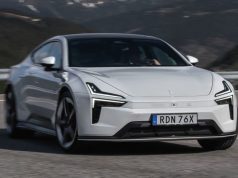
Happening upon a finished Polestar 5 for the first time, the car basking in soft morning light outside a hotel on the outskirts of Marrakesh, is enough to momentarily halt the chitter-chatter. The car’s snout, so low and wickedly tapered, has you wondering how it passed pedestrian impact regulations, quite apart from leaving room for the suspension top mounts. It has a menace that arouses some deep, primordial uneasiness, but the effect is spectacular and pure Polestar. An endless wheelbase then separates alloys snug in their arches before the spearish silhouette ends in a Kamm tail that has a whiff of the sci-fi Volkswagen XL1 – an effect enhanced if you opt for the Magnesium matt paint.
The 5 is a striking car – as it would be, having faithfully taken the lead of the show-stopping Precept concept of 2020. But pulling on the aesthetic thread unravels an even more interesting story. How is it that the proportions – beneath which lurks an output of 737bhp, rising to a ludicrous 871bhp in the top-ranking version – are so harmonious, and so unlike anything else in Polestar’s stable?
In the era of cost constraints and engineering rationalisation, the surprising answer is that the 5 has its own platform – one made with bonded sections of extruded aluminium in the Lotus spirit. It’s a curiously artisanal turn for a mainstream manufacturer, especially given that the Polestar Performance Architecture has limited potential to spawn other creations beyond the upcoming 6 roadster. Candidly, the 5 and its ultra-stiff underpinnings are unlikely to generate much profit. Yet it was important for its maker that this car be precisely as imagined, because it will serve as Polestar’s flagship. It’s the manifestation of the brand’s deepest values: electric performance in an elegant, reductive GT package.
It gets more interesting when you learn that, while production will be split between Polestar parent company Geely’s Chongqing and Wuhan plants in China, the development was undertaken largely at Horiba MIRA near Nuneaton by a 500-strong team of mostly British engineers.
The harsh reality is that many of those engineers, plenty of whom have decorated careers with stints at Lotus and McLaren, are now out of a job. Polestar quickly disbanded the facility at the end of the 5’s five-year development cycle. There’s no plan for another such project – not when Polestar already has Geely’s CMA, SPA2 and SEA platforms to use (as it has done for the 2, 3 and 4 respectively). The company is if anything spoiled for choice, which makes its decision to construct the 5 on a bespoke sporting platform both highly laudable and a bit bewildering.
Prices start at £89,500 for the 737bhp Dual Motor model, for which you get an 800V electrical architecture, four-wheel drive, a 0-62mph time of 3.8sec and 421 miles of WLTP-rated range. Above that sits the Performance with 871bhp, a 0-62mph time of 3.1sec and 346 miles of range. Both cars use a slim, 112kWh nickel-manganese-cobalt battery, an in-house-developed rear motor capable of 600bhp or so and another motor from ZF on the front axle. An RWD variant is potentially in the works, though its purpose would be to lower the entry cost to the range, rather than to be a driver-centric special.
Neither model features rear-wheel steering, active anti-roll bars or air springs – common currency in modern super-saloon circles. In fact, the Dual Motor version uses passive dampers; you need to spend £15,000 or so more on the Performance to have three-mode magnetorheological technology. With perfect weight distribution, a low centre of gravity and the geometries for the double-wishbone suspension devised for the 5 and the 5 alone, Polestar says hefty additional technologies were surplus to requirements.
Whether a car some 5.1 metres in length, weighing in at exactly 2500kg and with a truly alarming turn of pace might have benefited from some of those chassis toys is something we will get to – but before that, the cabin.
Courtesy of the 5 having a wheelbase only 5% shorter than that of a BMW 7 Series, this is a vast, limousine-like space with rear leg room notably better than what you will find in a Porsche Taycan. Neither the hulking depth of the shell backs for the impressive front seats nor the controversial lack of a rear window can diminish the sense of space – or light, which floods in through the full-length glass roof. The beltline and scuttle are also well drawn, the 5 ensconcing its occupants in traditional GT style without feeling intimidating from behind the neat steering wheel, which can be positioned just so for most drivers.
Only when you come to adjust the position of the contoured, old-school helm do habitual Polestar issues temper the positive vibes. You have to make this adjustment using a combination of the pin-sharp central touchscreen and unlabelled haptic controls on the steering wheel spokes. It’s the same for the mirrors, and numerous other major controls are accessed solely via the screen. Polestar executives are by now visibly weary of explaining that they’re aware the situation isn’t ideal and the next generation of cars will be better. But for now, the lack of quick access to major controls blights the 5’s otherwise lavishly wrought and ergonomically sound cockpit – notwithstanding the puzzling absence of a glovebox.
Competence in the GT class also means the ability to carry luggage, and the 5 is strong enough in this respect. The boot floor is high but space is good if not overly generous at 365 litres (Taycan 407 litres, BMW M5 446 litres). The sculpted rear seatbacks also fold forward almost flat, unlocking capacity fit for a tip run (as if you’d endanger the soft Bridge of Weir leather). There’s another cavity in the frunk, albeit a shallow one best reserved for dirty charging cables. Charging, by the way, is at up to 350kW, meaning 10-80% in 22 minutes, although only 11kW is possible from an AC supply.
The reason we’re in Morocco is that, to show off the 5’s capability, Polestar marketers wanted to drive a car from Gothenburg to the edge of the Sahara. Autocar was invited along for the final leg from Marrakesh to Ouarzazate, and it’s a fortuitous allocation, because the roads out here are varied and present similar challenges to those back home. We spent most of our time in the Dual Motor – so how good is it?
Any luxury four-seater with a power output close to that of an Aventador SVJ is going to make headlines with its performance and, yes, the speed is monumental. Not that you’re under pressure to deploy it. Tip-in response is neat but unhurried in the default map. It can be sharpened up a touch if you like, but the 5 has an ever-easy manner and plenty of travel in the accelerator pedal. It won’t snap your neck unawares.
If you do floor it, as you will at least once, the Michelin Pilot Sport 4 EV tyres on the Dual Motor bear the brunt of the car’s torque – a 599lb ft thunderstrike – well. However, there is an ever-present and unsurprising feeling that the chassis electronics are the arbiter of what really reaches the wheels in those incipient moments of thrust. It’s not usually a problem, but the tuning is on occasion a bit of a blunt instrument, joylessly pegging you back. As usual with Polestar, you can’t fully deactivate the stability or traction control systems.
There are then three modes for the regenerative braking – a good spread that includes coasting. Alas, you cycle through these not with paddles but via shortcuts on the touchscreen – next to other too-small icons that deactivate the lane keeping assist and speed limit bong. Pedal feel for the four-piston Brembos is unproblematic, neither swelling nor sapping confidence but simply allowing you to shed speed quickly and consistently.
So the 5 is rapid rapid but far from roguish. Of more interest is the interplay between its excellent steering, unusually long wheelbase and passive damping control. Together these elements result in enjoyably transparent handling of real breadth and class. The 5 changes direction keenly and establishes mid-corner balance quickly. The body is kept in close control while avoiding undue sportiness and always retaining rough-road suppleness.
The steering is then at its best in its lightest of the three maps, when it’s linear and lightly elasticated but with a firm, reassuring core in the motion. It’s less rich in feedback than the helm of a Taycan but more carefree and inviting of fingertip control and, without wanting to over-egg the 2.5-tonne pudding, just a little bit Lotus. Very few cars of this size and heft can find such an undemanding and pedigree-feeling flow.
The Performance variant, on the three-mode Magneride dampers, is just a little less cohesive, although this could partly be due to our car’s optional 22in forged wheels. An ample 21in is standard and we wouldn’t advise against opting for the 20in design.
The huge wheelbase that provides so much directional stability, and lays the ground for an unflustered ride on almost any surface you might throw the car over, also prevents the 5 from being truly entertaining if ever the desire takes hold. This chassis doesn’t invite you to have the back axle teetering on the brink of rotation on a trailing brake, as any flavour of Taycan will. And without rear-wheel steering, the 5 does require babying around tighter corners (this is relative, note: the 5 will feel devastatingly agile compared with any V8 super-saloon of just one or two generations ago).
On fast corner exits, the lack of a limited-slip differential as well as Polestar’s stability-minded set-up, which enlists the front axle early and generously, inhibits genuine poise and fun. But these are niche traits desired only by mad enthusiasts, who should still consider a Taycan first.
For everyone else (95% of people in the market), the 5 deserves its moment in the limelight. Here is a daily-usable performance saloon with supercar pace and a lovely, spacious cabin, built on a bespoke aluminium platform, with looks to stop traffic, for less than six figures. Be assured that its frustrations will irk at this price; Polestar knows it needs to course correct on some of its control interfaces. But in a world where it would have been all too easy to leave the 5 as a rakish concept in the Gothenburg archives, we should celebrate the fact that Polestar actually made it, and made it well.
Polestar 5 Dual Motor Launch Edition
Price £89,500 Engine Two permanent magnet synchronous motors Power 737bhp Torque 599lb ft Gearbox 1-spd reduction gear, 4WD Kerb weight 2500kg 0-62mph 3.8sec Top speed 155mph Battery 112kWh (total) Range, economy 421 miles, 3.5mpkWh CO2, tax band 0g/km, 4% Rivals Lotus Eletre 600, Porsche Taycan 4S