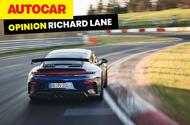
Before 2008, car makers had been quietly logging lap time – then Porsche suggested Nissan had cheated
For years, some of the more committed car makers had been quietly logging Nürburgring Nordschleife lap times for internal benchmarking and the odd press release. But then in 2008, Porsche suggested Nissan had cheated, which turbocharged matters, if you’ll excuse the pun.
The environment became political, with lap times under new scrutiny. Suddenly company reputations were on the line, and that has since been the way of things, the essential R&D work existing alongside the PR warfare.
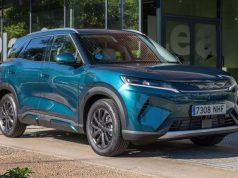
Chinese car makers with as much motorsport heritage as Brad Pitt’s APX GP today head west in search of engineering glory and publicity. And why wouldn’t they, when they’ve built an electric saloon that will skin a Manthey-tickled 911 GT3 RS from bridge to gantry?
So what exactly happened in 2008? Le Mans winner Toshio Suzuki drove an R35 GT-R around the Nürburgring in 7min 29sec, which was quicker than the time of the contemporary 911 Turbo. Suspiciously so. Nissan dined out on its achievement, and some might remember the billboard slogan: ‘The Germans Came Off Wurst’. Classy.
It’s fair to say the whole thing irritated certain people in Stuttgart. Irritated and puzzled. The problem was that the 911 Turbo, even with Porsche’s arsenal of factory drivers, couldn’t even get near the GT-R’s time.
“It’s not clear how this time is possible,” said Mr 911, August Achleitner, presumably through the most pursed of lips.
Porsche went so far as to buy its own GT-R and take it to the ’Ring. The result was a 7min 54sec lap, with a 911 Turbo going 16sec quicker on the same day. The fact that Porsche went to such lengths seems extraordinary now, but remember that the company was dealing with a worrying upstart – one far cheaper than the 911 Turbo but with similar all-weather performance.
It needed to know the reality of the GT-R’s potential and expose any suspected bullshit from the outset. It’s possible that Nissan originally fitted a funky tyre and perhaps turned the wick up on the turbochargers – contrary to its claims of a standard Japanese-market specification.
Back then, the community was more discerning in regard to what constituted a legitimate time; a non-homologated tyre was a big no-no. These days, in the flurry of attempts, we seem happy to let this sort of trickery through unquestioned.
It isn’t just extra-special tyres; it’s also roll-cages, trick geometry and stripped-out interiors. Tesla even ran the Model S Plaid with heavily tinted glass so nobody could see inside.
Proper attempts still occur, though, and I love hearing about them. They’re not the optimised occasions you might expect, either. It will be at the end of an industry test day, when the weather is good and someone at Lamborghini thinks ‘hey, maybe we could do something special here’.
So 29-year-old Marco Mapelli climbs into a factory-spec Huracán Performante and, through a blend of bravery and skill beyond most of us, clocks a sub-7 min lap, saying: “Even when you jump and are in the air, the car is flat, which means we can stay on the power more.” Forza, Marco.