US import tariffs mean Emira PHEV and new V8 supercar are most likely to be built at firm’s British factory
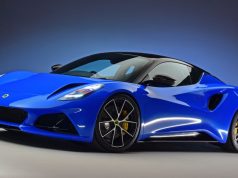
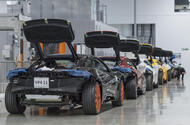
Lotus considers its Hethel factory in Norfolk to be the best location for production of its upcoming Emira hybrid and Type 135 sports cars.
Dismissing recent reports that Lotus could shut down its historic British base as a “rumour”, CEO Feng Qinfeng has indicated that the site is tipped to play an increasingly important role in the company’s revamped global strategy.
Speaking at the Financial Times Future of the Car summit in London, Feng acknowledged that Hethel has “seen a lot of challenges” in recent years, pointing particularly to the impact of the new import tariffs in the US market, which takes 60-65% of all Emiras produced there.
Lotus cited those tariffs as a leading factor in its decision last summer to cut 550 British jobs – roughly 40% of its workforce in the country – as part of a move to stem increasing losses.
That was the latest in a succession of workforce reductions at Lotus over the last two years and came as speculation mounted over the ongoing viability of Hethel – with sources suggesting company bosses had even gone so far as to sign off on the factory’s decommissioning.
But today Feng said Lotus plans to “definitely keep the UK factory running” and that it could even dramatically boost vehicle output there as it adds two new combustion-engined sports cars to its line-up.
As part of a significantly reworked global strategy, Lotus is shifting its mid-term focus away from slow-selling luxury electric cars to performance hybrids, with the long-mooted Type 135 sports car now to be powered by a hybridised V8 – rather than a pure-electric powertrain as earlier planned – and a new PHEV version of the Emira inbound.
Lotus released the first official image of the incoming V8 Typer 135 on Tuesday
Lotus had earlier said it was “likely” to build the two sports cars in Europe, and Feng has suggested that Hethel is the most likely venue, because of the lower US tariffs imposed on UK-built cars, the skills and expertise already established at the plant and the available capacity it still has.
Feng said the imposition of the US tariffs last year had a huge impact on Hethel, which sends most of its output Stateside, but said “it would be irrational to simply raise the price to tackle the problem” and “we had no solution but to temporarily shut down the factory”.
But he pointed to the fact that Lotus parent company Geely has invested more than £1 billion into Hethel’s transformation as testament to its commitment to the plant, adding: “We definitely want to keep the factory going and we definitely want to be better – to grow.”
“We have made a lot of effort to improve the operational efficiency,” Feng said. “The factory has great strength in terms of skilful engineers and skilled workers. We really want to keep the factory and keep the business sustainable.”
He said that while Lotus could seek to expand its global production network by leveraging available capacity at its Geely siblings’ plants, Hethel has a number of competitive advantages that make it “the best option for us when it comes to the production of Type 135 and the hybrid Emira”.
The most important of these is that cars built in the UK attract a 10% import levy in the crucial US market while the fee on EU-built cars currently stands at 15%, with President Trump recently threatening to hike that as high as 25%.
But there are a number of other factors at play that could result in Hethel playing a fundamental role in Lotus’s new plan to grow to 30,000 annual global sales by 2030.
Hethel currently builds around 2000 cars per year but has an outright capacity of 10,000 in its existing state, Feng said, leaving significant head room to add more products – and significant efforts to “enhance the operating efficiency of the factory” have been made to optimise the cost of building there and mitigating the impact of global headwinds.
“We are investigating the possibility of producing these two models at the Hethel factory,” Feng said, but “it would require a lot of preparations to be done, especially on the supply chain.”
He highlighted the importance of establishing a sustainable, cost-effective supply of batteries for the new hybrid models, and said that “even though these are sports cars, we also want to incorporate smart and intelligent technologies into the vehicle”.
Feng said Lotus “would like to see support from the UK government” to prepare Hethel for the future and confirmed that Lotus has applied for exemption from the US tariffs as a low-volume manufacturer.