
Steel wall erected around UK
Credit: Tata Steel
On the wireless this morning, Times Radio interviewed Peter Kyle, the business and trade secretary, who announced increased import duty or tariffs on foreign steel. At the same time explaining that the last remaining blast furnaces in the UK will be closing soon, and he expects that they will be replaced with electric arc furnaces that will reduce the CO2 impact of the plants.
One assumes that Kyle does not have a chemistry O level and does not release that you can’t make steel without carbon. The whole point of the Blast Furnace is to cook coal with Iron Ore to make steel. An electric arc furnaces just melts existing steel down to be reformed into new ish steel.
The implications of this are far and wide.
The UK will no longer be able to make steel. Some components, especially in the defence industry need specially formulated steel that can only be produced at the time of generation rather that re melting.We are closing the Bast Furnaces as they are not competitive on price with imported steel and replacing them with arc furnaces that use huge amounts of electricity and we have the highest priced electrical power in the world. Hardley going to help make steel cheaper. Part of the reason that our steel is expensive is that we have to import coal from Australia to burn rather than use UK coal. – Madness.This will ramp us prices for all steel and all steel products. – That’s most products and construction. – Think how much steel is in a bridge or office block or car or dishwasher.Expect this policy to push up inflation.A much better plan would have been to build a new blast furnace near a coal mine to reduce the cost of coal and transportation. A new plant would be far more efficient that the 10 year old ones currently in operation.
The facts
Ministers have announced that the UK will implement a tariff cordon around its steel industry to protect British steelmakers from a glut of Chinese steel. This move, hailed by the steel industry as a fundamental shift in the government’s trade policy, involves slashing import quotas for tariff-free steel by 60% from July and imposing a 50% tariff on imports exceeding these levels.
Peter Kyle explained that the new tariffs are intended to safeguard a sector crucial to the government’s industrial policy. He emphasised closing the decades-long chapter of destructive deindustrialisation and committing instead to bolstering and sustaining Britain’s steelmaking legacy.
To no surprise UK Steel, the steelmakers’ lobby group, characterised this shift as a “transformation” in policy towards the sector. This sector’s share of the UK market has plummeted to just 30% due to global competition and expensive pricing.
UK Steel director-general Gareth Stace praised the government’s courage in taking necessary action, highlighting a real change in Westminster’s culture from prioritising free trade at all costs to defending vital industries and national security.
While the steel industry celebrated, others cautioned that higher tariffs could negatively impact manufacturing industries reliant on imported steel. William Bain, head of trade policy at the British Chambers of Commerce, warned that this move signalled the end of ever-lower tariffs on manufactured goods and risked leaving manufacturers reliant on imports feeling the financial strain.
China, a major steel producer, generates approximately 1 billion tonnes annually but has experienced a sharp decline in domestic demand following a downturn in its property market. This has resulted in a glut on global steel markets. The British decision followed an EU announcement last year that it would halve quotas and raise tariffs to 50% on global imports. UK officials clarified that this move wasn’t intended as retaliation against the EU. These tariffs and quotas are part of a broader new “steel strategy” aimed at revitalising and decarbonising the industry. Labour first pledged £2.5bn of funding for this strategy three years ago. The strategy will reaffirm the Labour government’s commitment to electric arc furnaces, a cleaner type of steel production utilising recycled scrap.
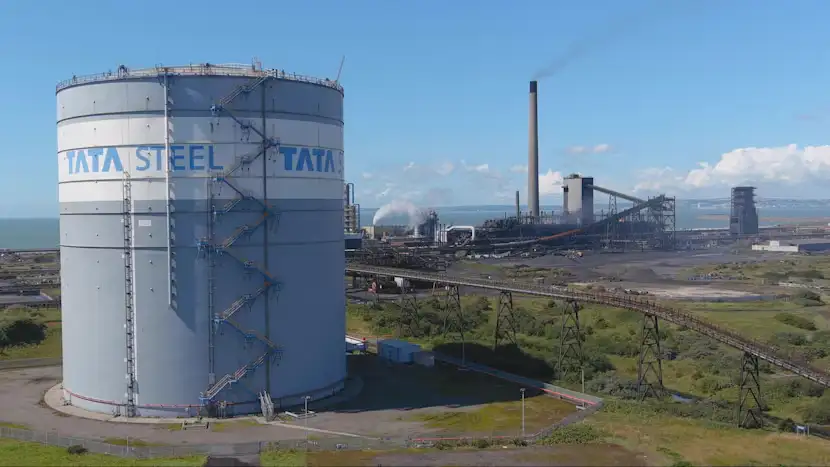
Business and Trade Secretary Peter Kyle gave details of the strategy on a visit to Tata Steel’s plant in Port Talbot, South Wales, warning that without action, the UK’s steelmaking capability faces “real jeopardy”, leaving the country reliant on overseas suppliers for materials essential to energy security, defence and transport infrastructure.
Mr Kyle said: “Making steel in the UK is vital for national security, critical infrastructure and the wider economy.
“Steel-making is a cornerstone of our modern industrial policy that deliberately focuses support for key industries, technologies, and strategically important sectors.
“With this strategy we are closing the decades-long chapter of destructive de-industrialisation and committing instead to strengthening and sustaining Britain as a steel-making nation.”