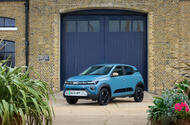
Spring is currently the only EV Dacia sells
Romanian brand wants to expand line-up as part of major growth push
Dacia will launch four new full electric vehicles between now and 2030 as part of a major growth push, including a sub-£16,000 city car based on the Renault Twingo and a next-generation Sandero with multiple powertrain options.
The new models will arrive alongside the new Striker – a new quasi-estate related to the Bigster that was revealed today with hybrid power – as part of the Renault Group’s next wave of launches, which are intended to reinforce Dacia’s “distinctive positioning as the benchmark for affordable, essential and robust mobility”.
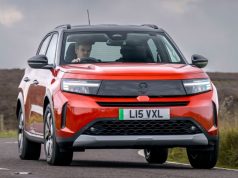
Dacia currently offers just one electric vehicle, the Chinese-built Spring. But that will be joined later this year by a new city car built on the Renault Group’s AmpR Small platform, which has been developed in just 16 months and is closely based on the Twingo.
While Dacia has yet to give firm technical details of that car, it will likely closely match the Twingo with a 27.5kWh battery giving a range of just over 160 miles. Notably, Dacia has confirmed the model will be priced from less than €18,000 (£15,600), undercutting the sub-£20,000 Twingo and making it one of the cheapest EVs on sale.
Dacia has then committed to launch three further electric vehicles in the next four years, although it has not yet given full details of them. One, however, will be the electric version of the next-generation Sandero, which the firm has confirmed will adopt a “multi-energy powertrain range”.
As previously reported by Autocar, it will remain on Renault’s CMF-B platform, which does allow for pure combustion, hybrid and electric powertrains.
The Sandero will “remain the value-for-money benchmark in its segment”, said Dacia. It was for years the cheapest car on sale in the UK.
As well as expanding its EV line-up, Dacia will continue to expand its hybrid offerings. While around a quarter of Dacia’s currently sold feature a hybrid powertrain, the goal is for that to reach two-thirds in the future.
The Striker and Bigster will be key to growing sales in the larger and more profitable C-segment. That market currently accounts for around a fifth of the brand’s sales but the goal is for the combination of the two vehicles to increase that share to a third in the coming years.
More broadly, Dacia will continue to lean on what it calls a “unique business model”, drawing on a “disciplined” design-to-cost strategy that, helped by the use of shared group platforms and a lean distribution system, it claims gives it a cost advantage of 15% compared to rivals.
Dacia is also aiming to further strengthen its customer loyalty: it claims that more than 70% of owners stick with the brand when buying a new vehicle, with a further 10% switching to Renault.