China has moved away from the heavy battery box, but European makers aren’t finding it so easy
European car makers are struggling to move forward with a key improvement to their EV construction, in a situation that a key supplier has called “completely crazy” and a “mess”.
Cell-to-body construction is a much more efficient way to package the battery in an electric car and has helped Chinese makers including BYD build EVs faster and more cheaply.
But car makers in the rest of the world, especially Europe, are battling with limited success to make the changes needed to move away from costly battery boxes, compounding the price difference between their EVs and those from China.
“There is no kind of standard solution [in Europe],” Francisco Riberas, executive chairman of Spanish metal parts supplier Gestamp, told Autocar. “It’s completely crazy. We are producing battery boxes that cost around €600-€700 [£520-£607].”
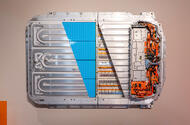
The battery box was the car industry’s initial solution to the problem of storing volatile cells in the floor of an EV. The cells were packed into modules and the modules into the box, which protected the cells and allowed it to be fitted to a platform designed for combustion engines. It also offered structural rigidity.
But these boxes are heavy and expensive to produce. Some car makers tackle the weight issue by making them out of extruded aluminium, but that also jacks up the cost.
These are massive structures. The one used by premium cars based on the Volkswagen Group PPE platform, such as the Porsche Macan Electric, measures 2.0m long and 1.4m wide with a thickness of 173mm.
In China, BYD and others figured out a way to first do away with the modules (cell-to-pack) and finally the box (cell-to-body), starting with the BYD Seal in 2023.
The body shell took over the responsibility of protecting the battery while the cells themselves took over some of the responsibility of creating rigidity.
Now European car makers want to do the same in tandem with key suppliers like Gestamp.
“Everybody is considering the cells and how they are packed. It’s something that is moving very, very fast,” Riberas said. “The new idea is to reduce the protective function of the battery box and to pass it to the body-in-white. It means you don’t need to have such a complex part and you can go back to stamping of steel or aluminium.”
But while China moves steadfastly towards cell to body, Europe is wavering.
“It’s a mess in the market,” said Xavier Herrera, Gestamp’s body-in-white director. “Every customer has a different cell or battery strategy and it’s complicated. Some are following the trends, but then they might reverse that.”
The advantages of the new method are fairly clear. BYD claims that freeing up the space creates a volume utilisation improvement of 68% while allowing a 10% better energy density, as well as a lower floor. Tesla claimed that moving to cell-to-body reduced weight by 200kg.
Stamping parts is quicker and cheaper than extruding and the general complexity is reduced, making the cars easier to build.
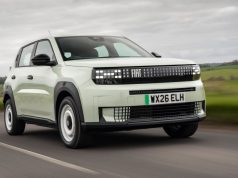
Changes are afoot. The first steps to a cheaper structure is reducing module count, which is what Renault has done with the 4 and 5, which have four modules per pack compared with 12 on the Scenic and Megane. And on the new Twingo, with its cheaper lithium-iron-phosphate (LFP) battery chemistry, the company is shifting to a cell-to-pack arrangement that does away with modules.
“You’ve got only the casing and the cells inside the case,” Renault product chief Bruno Vanel told journalists at the recent Brussels motor show.
Renault will go to cell-to-body, Vanel said, but it’s a big move: “It depends on the cars, they have to have the right structure, body, everything. You need a completely new architecture.”
Even car makers launching all-new EV platforms aren’t going the whole hog. BMW, for example, chose a cell-to-pack arrangement with its Neue Klasse platform, starting with the 108.7kWh pack in the new iX3, which retains the battery box.
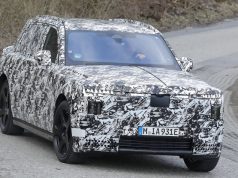
The exception in Europe is Volvo, which says its new SPA3 platform underpinning the new EX60 does use cell-to-body technology, which it reckons improves energy density by 20% as well as saving 70kg.
The Volkswagen Group meanwhile has kept the battery box for the new front-wheel-drive MEB+ platform underpinning new models like this year’s VW ID Polo and Skoda Epiq – although it is gigacasting the 1.7m-long box, rather than using extrusions.
Other than Volvo for the EX60, this process marks the first time gigacasting has been used at scale in Europe by someone other than Tesla. Volkswagen claims it replaces 123 parts while reducing weight by 10% and lowering cost by 15%. The continued use of aluminium, however, means the cost will still be high.
The slow shift to cell-to-body in Europe is more evidence that the region’s car makers are hampered by their ICE legacy and the lumpy pace toward electrification.
“It means a lot of changes, a lot of risk,” Gestamp’s Herrera said.
Parts carried over from modular platforms, many of which have their roots in ICE technology, prevent a wholesale shift to making a change to the central structure of the car.
In China, car makers have the impetus and the finance, said Herrera: “It’s easier for them in some ways. They have this pressure to reduce costs, but they also have money to buy new presses to apply these new technologies.”
Then there’s the relationship with the battery maker. Shifting to a cell that becomes a structural part of the body requires a deeper relationship with the supplier that many European makers don’t have. Stipulating a specific design could restrict their ability to switch suppliers for cost or localisation reasons. In controlling their own battery supplies, BYD and Tesla have it a lot easier. Structurally integrating battery cells also makes them harder to replace and recycle.
But the fact remains that cell-to-body offers an opportunity that’s too good to pass up.
“Reduce the part count, bring down the material use, produce their car faster so you can reduce LCA [life cycle assessment] emissions and be more cost-competitive: if you match all the parameters in this equation, they are willing to introduce this,” Herrera said.