
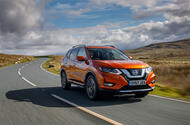
X-Trail is a remarkably cheap way to get seven seats
The third-generation Nissan X-Trail presented a challenging design brief. Not only did this family SUV need to fill the void left by the defunct seven-seat Qashqai+2, it also needed to appeal to buyers looking to ditch their MPV. What followed was a sleek, Qashqai-inspired soft-roader that could cater to families, however big or small. In 2014 you would have paid close to £30,000, now just over a tenth of the price – impressive value for a seven-seat SUV that offers the same space, versatility and ease of use as any modern family hauler. Indeed, the swish exterior reinvention meant the same treatment had to be applied to the cabin, which has a generally pleasant, pragmatic ambience.The unusual quirks of its predecessors, such as the centrally mounted instruments and funky upholstery, were gone, with the new X-Trail adopting a sensible and robust approach. Sure, it’s a bit austere, but the panoramic roof that’s fitted to many advertised examples adds a touch of allure and the fixtures and fittings are all toddler-proof. Rear space is good enough for adults, even if head room is a little stingy, and you can slide and recline the second row to increase leg room or maximise boot space.The third row is only suitable for kids, and while you can snag a tidy seven-seat X-Trail with around 60k miles for about £9000, an equivalent five-seater will cost £2000-£2500 less. Forgo the extra seats and you also gain underfloor storage, although the 550-litre boot can swallow a generous helping of luggage. For trips to the supermarket and everyday commuting, the 1.6-litre petrol engine that makes 160bhp and 177lb ft of torque delivers solid real-world pace and should achieve 40-45mpg. The 1.6-litre diesel is more frugal and will easily average 50mpg, but with just 128bhp and a 0-60mph time of over 11sec, it lacks punch. If an oil-burner is your favoured choice, the 2.0-litre diesel that was launched as part of a facelift in 2017 offers greater flexibility and strong fuel efficiency. It’s not the most refined engine, but it will do around 45mpg, and if you find a manual example with four-wheel drive, it can tow up to 2000kg – and handle a bit of light off-roading. You’ll need closer to £12,000 if you want a manual, 4×4 example with around 60k miles on the clock, and it’s only really worth the extra cash if you’re doing a lot of towing. You’ll pay around £3000-£4000 less for a front-wheel-drive petrol model with similar miles under its wheels. Nissan added a 158bhp 1.3-litre turbo petrol engine to the line-up in 2019. It’s a solid daily driver, and the dual-clutch ‘box is far more refined than the CVT fitted to older models. A 148bhp 1.7-litre diesel arrived a year later, but it’s gruff and not as punchy as the older 2.0-litre. The laid-back engine line-up says much about how the X-Trail rides and handles. It’s an undemanding car to drive that deals with UK roads well- just don’t expect boatloads of engagement or feel. It doesn’t roll excessively through corners and there’s consistent grip and good weight to the steering. The ride is comfortable in most settings, although it could be a little quieter and better isolated around town. You’ll struggle to find a better-looking SUV that’s as comfortable, spacious and practical for as little as £3500.