This article may contain affiliate links.
Do you want to know how to separate the gems from the junk?
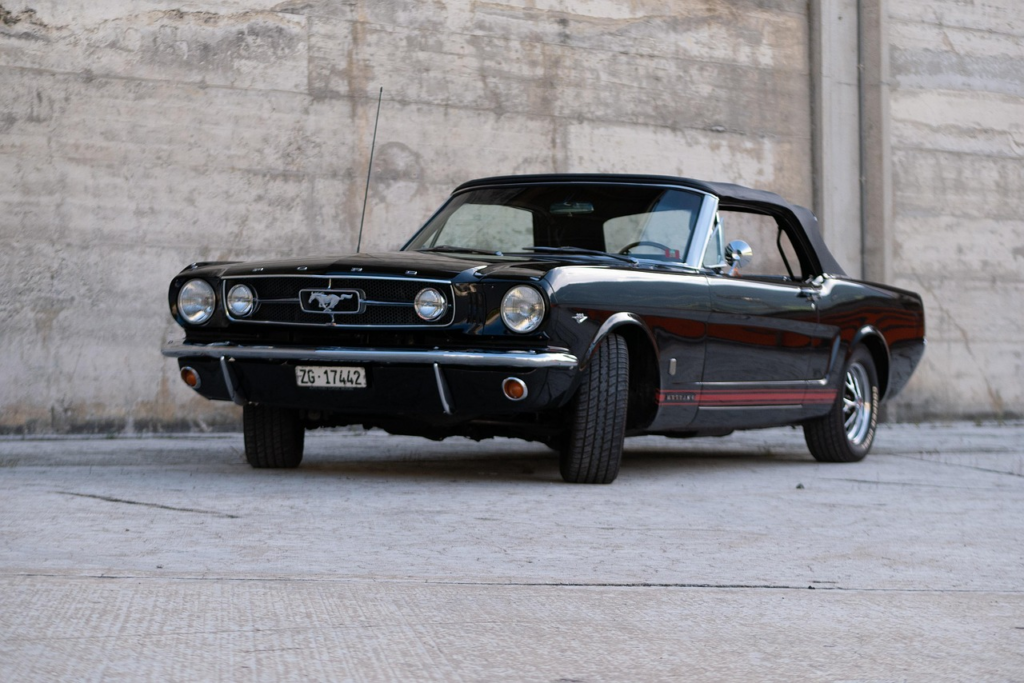
Classic Mustangs are an American institution. For collectors willing to put in the research, these old cars can be a valuable investment. But buyer beware, not all Mustangs are created equal. Some are worth small fortunes, while others are lemon sacks.
Knowing the key factors that affect value and rarity in the classic Mustang market is the difference between buying wisely or overpaying by tens of thousands of dollars.
In This Post, You Will Learn:
What makes classic Mustangs valuable?
The rules of rarity in the Mustang market
All the factors that drive valuation
The signs of a good investment
What Makes Classic Mustangs Valuable?
Right now, the classic Mustang market is red hot. According to recent market data, the global classic car market is expected to hit $39.7 billion by 2024. A big percentage of that pie is going directly to American muscle.
Why?
Because classic Mustangs have everything collectors are looking for. From heritage, to performance, to cultural cache.
Case in point, take a look at one of the most prized classic Mustangs on the market today, the iconic 1967 Mustang Shelby GT500.
In the first year Shelby offered the GT500 package, only 2,048 Shelby GT500s were ever built. Out of all the classic cars for sale today, the ’67 Shelby GT500 has to be the rarest, most desirable option on the market.
And it’s not just a muscle car. It’s an investment. Sure, you could drop $100k to $200k for a standard 1967 Shelby GT500 in good condition. But cars in pristine condition? The Super Snake can easily bring in $2 million at auction.
Not too shabby, eh?
Understanding Rarity in the Mustang Market
Rarity is the mother’s milk of value in classic car collecting. The less of something there is, the more it’s going to cost. But being rare doesn’t always mean being expensive.
Instead, these factors combine to determine the ultimate value of a classic Mustang:
Production numbers
Survival rate
Demand
Historical significance
The first-generation Shelby GT500 is rare for sure, but more importantly, it has high demand and tons of history.
Only 2,048 were ever produced in 1967. Collectors wanted them from day one, so the survival rate is great. And everyone has seen them in movies like Gone in 60 Seconds.
Compare that to some of the ugly duckling Mustang II models from the ’70s. We’re talking 100,000 per year production numbers. No one wants them, and they don’t have the same historical importance. Production numbers set rarity, but the story sets value.
Key Factors That Affect Valuation
So what are the specific factors that determine how much a classic Mustang is worth?
There are several key considerations:
Condition
It goes without saying, but a numbers matching, unrestored Mustang in excellent condition will almost always get the highest price. Collector value means originality, so anything modified beyond factory options is worth less.
Documentation
Can you trace the history of the car? Original build sheets, window stickers, service records, and proof of ownership. These all add value to a classic Mustang.
One thing we always recommend is Marti Reports. It’s the best way to verify the rarity of the option package of your Mustang.
Matching Numbers
Are the engine, transmission, and rear axle from the factory original? If not, it’s not worth as much, as the Marti Report will verify. Parts swapping to make a car faster devalues the car for collectors.
Market Trends
The collector market ebbs and flows with generations. According to Hagerty’s 2024 analysis, we are in a massive generational shift. Gen Z now accounts for 9.8% of all collector car insurance quotes. Add in Millennials, and younger buyers account for 30% of the market.
Which cars will these new collectors drive up the price ladder in 20-30 years? Gen X grew up with the IROC-Z Mustang, so guess what’s the hottest now?
The market is changing, but one thing is certain. We are in a golden age for classic muscle cars.
Provenance
If a celebrity drove the car? Did it appear in a film? Did a famous race driver win races in it?
Connections to the rich and famous, or to the history of the marque, are worth a lot to collectors.
How to Spot a Good Investment
Not every classic Mustang is a good buy. Some are lemons. Use these tips to figure out the winners from the losers.
Do the homework. Know the production numbers of your model year, body style and engine combination. Fastbacks always beat coupes, and big blocks always beat small.
Inspect closely. Rust is the classic car killer. Look at the floor pans, torque boxes, and frame rails. Bad previous repairs cost more to fix than the car is worth.
Verify everything. Don’t take the word of the seller for matching numbers. Get documentation. Run a Marti Report. Match VIN plates to the car’s history.
Buy the best you can. A nice example will appreciate faster, and be more fun to own than a rust bucket.
Look for future demand. Which models will younger collectors be after in 20-30 years? Right now, the cleanest first-generation Mustangs (1965-1968) are most desirable.
The best Mustang investments have rarity, condition and documentation. Miss one of those areas and you’re gambling.
The Bottom Line on Classic Mustang Investing
Knowledge is power in the classic Mustang market. Buyers who understand what collectors really care about–rarity, condition, documentation, and history–consistently make better decisions. Buying emotionally and on impulse almost always leads to regret.
Look, first-gen Shelbys and big-block fastbacks are going to continue to appreciate in value. They have strong scarcity, high demand and strong history. Standard models in fair condition might hold their value, but expect much slower appreciation.
Think long-term. The best classic car investments are the ones you actually enjoy driving and living with. Buy a car that makes you happy. Take care of it. And then sit back and let time work its magic.
The Final Word
Collecting classic Mustangs isn’t just about stashing away stacks in a garage. It’s about owning a piece of American car culture. Done right, it can also be a solid financial investment that grows while you drive.
The important points:
Rarity and desirability drive value
Condition and documentation are critical
First-generation Shelbys and fastbacks are the standard
Never buy without research
The market continues to evolve. New collectors enter it every year. And iconic Mustangs like the ’67 Shelby GT500 continue to reign supreme.
Smart buyers do their research. They read the trends, understand the market. And above all, they purchase quality, not quantity, every time.
That’s how successful collections are built.
The post Classic Mustang Collecting: A Guide to Valuation and Rarity first appeared on Clean Fleet Report.