
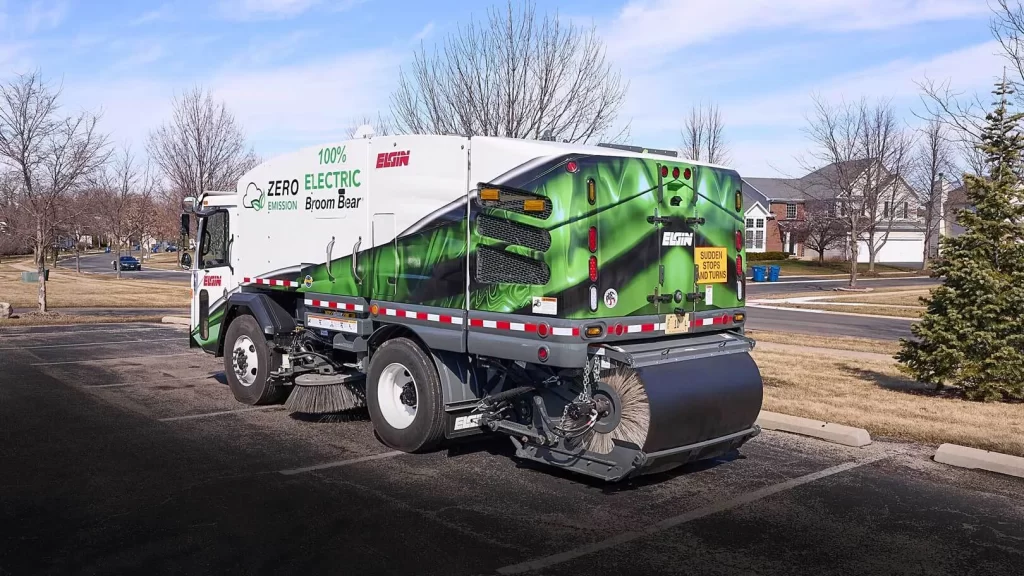
Municipal fleets are essential for cleaning streets, managing waste and maintaining public infrastructure. However, they often incorporate systems that produce pollution and require frequent maintenance.
Electric vehicles for city maintenance reduce local emissions and improve neighborhood livability. Although more expensive upfront, EVs offer several benefits that justify the cost of ownership.
Why Electric Vehicles Fit City Maintenance
Electrification aligns with city maintenance needs for various reasons. First, it reduces pollution and greenhouse gas emissions. The EPA estimates that if every household in the U.S. replaced one of its cars with an EV, emissions could drop by roughly 160 to 320 million metric tons per year. Shifting to electric vehicles in municipal fleets directly cuts emissions in dense neighborhoods and near schools and hospitals, delivering immediate public-health benefits.
Quieter operation is another measurable advantage for city maintenance. Routine early-morning or late-night tasks are less disruptive with electric drivetrains and reduced hydraulic noise. This improves neighborhood cleanliness and eases community friction around necessary services.
Major cities are already moving at scale. For example, Los Angeles planned to purchase over 1,000 EVs in 2024, and New York City is targeting a fully electric municipal fleet by 2030. Electrification is becoming operationally feasible, and fleets are the center of today’s urban planning.
Infrastructure and Operational Considerations
Electrifying an entire fleet can bring many advantages to city operations and nearby residents. However, upgrading to a fully electrified fleet requires planning. Cities must consider the depot power, charger capacity, site layout and utility upgrades they need to meet equipment demands.
For instance, heavy-duty and fast-charging equipment can demand transformer upgrades and different parking layouts at vehicle yards, so fleets typically need coordinated electrical design and construction work upfront.
Those capital needs can be a barrier, but federal and state programs offset the costs of public-sector projects. Therefore, electrification is becoming more affordable, but city planners must understand how to make their area grid-friendly to facilitate such infrastructure.
Operational planning must also change to match battery range and charging characteristics. Route and duty-cycle analysis are common steps to ensure vehicles complete daily assignments without service interruptions. Finally, emerging approaches like vehicle-to-grid pilot programs are beginning to show that electric trucks may provide additional revenue streams during idle hours, improving the long-term economics of depot upgrades.
Public-Private Partnerships in Electrification
Public-private partnerships (PPPs) are a typical route to full electrification of city fleets because they let municipalities share upfront cost and operational risk while speeding practical learning. Cities can set contract outcomes while private operators refine charging and routing and absorb short-term technology risk. This structure is what makes staged fleet transitions more feasible without disrupting service.
Many municipalities use staged pilots and cooperative procurement with contractors so fleets can test vehicle types, charger layouts and duty-cycle changes before a full rollout. For example, regional providers are piloting new service offerings like vehicle electrification and evaluating operational impacts. Embedding those pilots into outcome-focused contracts and pairing them with grant funding helps spread capital costs and align long-term service expectations.
The Long-Term Benefits and Broader Impact
EVs for city-maintenance deliver benefits across the environment, public health, operations and grid resilience. Municipal decision-makers should weigh the following key impacts:
Health and equity: Reduced emissions offer overall public-health benefits for overburdened neighborhoods. Recent research estimates $2.4 billion in avoided health costs and 248 prevented deaths when trucks and buses are electric, creating larger community benefits over diesel-powered vehicles.
Cost and operations: Over a vehicle’s life, simpler drivetrains and lower per-mile energy expenses can push total cost of ownership in favor of electric vehicles for many fleet use cases. This is especially true when federal and state incentives offset upgrading equipment investments, so electrification is increasingly economical for municipal roles.
Service reliability and fleet availability: Electric drivetrains have fewer moving parts and simpler maintenance needs than diesel engines, which can reduce downtime and increases vehicle availability. When paired with telematics and predictive maintenance tools, electrified fleets let managers schedule repairs before failures occur, so routes stay on time.
Powering Service and Protecting Health with Electrified City Maintenance Fleets
Electric vehicles offer municipalities a simple path to quieter streets, lower emissions and improved lifetime costs. Realizing those gains demands upfront investment and careful route-and-duty planning. With targeted funding and partnerships, cities can make maintenance operations more sustainable and dependable for the future.
The post Quiet, Clean, Efficient: The Case for Electric Vehicles in City Maintenance first appeared on Clean Fleet Report.